Saturday, August 3, 2013

Captain America

     I really like superheroes.

     They're modern-day mythology - our counterpart to the Greeks' having Achilles, Hercules and the residents of Mount Olympus. I was watching Captain America Thursday night for maybe the fifth time, and thought I should write a post about the character.

     It was 1943, World War II had been raging for our guys for over a year, and in some parts of Europe, it was the fourth year of the war. A morale boost was needed to keep up support for the war(why don't we have that nowadays?), and so several people at Timely Comics(later Marvel), most importantly writer Joe Simon and artist Jack Kirby, created a super-patriotic superhero, very pro-American and anti-Nazi. That character, of course, was Captain America. Interestingly enough, the fourth Captain America story, which features Cap using his shield as a weapon for the first time, was one of the first jobs a young writer named Stan Lee ever did for the company.
     Audiences loved the character, and he became one of the early star superheroes. After the war, punching Hitler didn't make as compelling a story anymore, and so people gradually lost interest as Communism made a less-than-appealing opponent. Actually, they pretty much lost interest in superheroes altogether, as comics shifted from telling tales about superhumans to depicting Westerns and love stories. (Ick.)
     Stan Lee pretty much hated this shift in focusing, but he needed a job, so he kept working, eventually rising to chief writer (and even farther on, editor) of Marvel Comics. He really wanted to quit, he was so fed up. His wife said, "Well, you don't like the job you're doing; but you're also so creative; there needs to be an outlet for that somehow. Why don't you write one story just the way want to write it, not for any editors or anybody, and see what happens? The worst they can do is fire you, and you already want to quit." So he took her advice, and that story led to a radically shift in the comics industry, as well as culture in general. It was about this team of superheroes known as the Fantastic Four, which later led to the Avengers and X-Men, as well as Spider-Man and a lot of other lesser-known characters.
     Early on in the Avengers series, someone decided to bring Captain America back to life, and he was reincarnated to become in some ways the leader of the Avengers, audiences loved it. About fifty years after this rebirth, that led to the Marvel Cinematic Universe, featuring the stories of Iron Man, the Hulk, Thor, and Captain America, just to name a few.

     Out in a polar icecap in the Atlantic somewhere, people find this huge....behemoth of something or other. S.H.I.E.L.D. agents from Washington come to check it out, and they find something encased in the ice - a man in a blue suit, with a shiny round shield. The action then cuts back from this mise-en-scene(French cinematic term meaning "middle of the action"), flashing back almost seventy years to 1943, where a Nazi high-in-command officer in charge of HYDRA, the special-research division, named Johann Schmidt takes a mysterious, and extremely powerful, cube rumored to be a tesseract from the gods.
     Besides the great story, this movie has so many great one-liners, beginning with the opening lines: "Are you the guys from Washington?" "You get many other visitors out here?" Schmidt mentions the search for the Ark of the Covenant in Raiders of the Lost Ark, and there's loads of other scattered quips.
     We're then introduced to Steve Rogers, a quick-witted scrawny, skinny asthmatic highly gifted with courage(to the point of stupidity), humility, and sarcasm; he has a very strong moral compass. Due to numerous health issues, he's failed the draft physical five times, and his best friend Bucky just enlisted. Due to leave the next day, they attend an expo of high-tech future gadgets, run by Howard Stark, Tony's father. Steve tries futilely one more time to sign up; a man named Abraham Erskine overhears Steve and Bucky arguing over this, is intrigued by the five tries. He offers Steve the chance to join the army for real, sending him to Camp Lehigh for training. "Do you want to kill Nazis?" "Is this a test?" "Yes." "I don't want to kill anyone. I don't like bullies, no matter where they're from."
         Throughout the training, he catches the eyes of grouchy Colonel Chester Phillips and beautiful British 
MI-6 agent Peggy Carter, through a mix of dogged determination, ingenuity, and self-sacrificial actions if needed. Rogers is eventually selected to test Erskine's super-serum formula, previously used on Schmidt. That prototype failed; as it wasn't ready. It amplifies every character trait, so good becomes great, and evil becomes worse. "Whatever happens tomorrow, you must promise me one thing. That you will stay what you are. Not a perfect soldier, but a good man." But's Steve is still curious. "Why me?" "Because a strong man who has known power all his life may lose respect for that power, but a weak man knows the value of strength. And compassion." 
     Peggy escort/guides Steve to the place where the procedure will take place the next morning. They have a conversation, she says, "You really have no idea how to talk to a woman, do you?" "Not really. I think this is the longest conversation I've had with one. Women aren't exactly lining up to dance with a guy they might step on." "You must have danced."  "Well....askin' a woman to dance always seemed so terrifying. And then the past few years....it just didn't seem to matter that much. Figured I'd wait." "For what?" "...The right partner."
     The experiment works, but a HYDRA spy acting as the Secretary of State shoots Erskine and captures one of the Vita-Ray tubes. Erskine dies, thus taking his knowledge of the Super-Soldier project to the grave with him. (Later attempts to resurrect it resulted in Bruce Banner's becoming the Hulk following the gamma explosion.) Steve chases the guy, getting beat up, before finally catching him, and the spy commits suicide. "That wasn't so bad." Erskine looks at him. "That was penicillin." Or just before the injection of the Vita-Rays, "Steven? Are you all right?" "I guess it's too late to go to the bathroom, huh?" "How do you feel?" Peggy asks after the experiment. "Taller."
     Steve becomes a propaganda tool, serving as "Captain America" to promote sales of war bonds and pro-war newsreels. He'd rather be on the front lines, but still, he tries to do the best job selling patriotism and pride and everything that he can. That doesn't always mean he succeeds, however.
     After getting heckled mercilessly for his performance in front of a group of battle-scarred GIs, he's frustratedly drawing a picture of himself as a dancing monkey. That's when Peggy tells him that his audience was all that was left of a company decimated by Nazis, with most killed and the rest taken prisoner. Hearing that it's Bucky's unit, Steve immediately goes on an emergency rescue mission with Peggy and Howard's help. He basically single-handedly rescues the prisoners; a big shootout ensues, Schmidt and his henchman scientist Dr. Zola blow up the factory. One of the prisoners says just after rescue, "Wait...you know what you're doing?" "Yeah. I've knocked out Hitler over 200 times."
      Or when he finds Bucky: "Steve?" "Come on, I thought you were dead." "I thought you were smaller." "I joined the Army!" "Is it permanent?" "So far." 
      The fact that this dialogue is occurring as they're escaping amid explosions adds to its greatness. As Bucky and Steve are escaping, and just before Schmidt jettisons the inferno, he reveals himself to be the Red Skull, taunting Cap. "What makes you so special?" "Nothing. I'm just a kid from Brooklyn." That sums up his Everyman-ness, the fact that he'd take on a bully for disrespecting the flag in a movie, who has a job to do, and who will do his best to get it done.
     Several days later, Steve leads the prisoners back to base camp, much to the cheers of everyone else. Col. Phillips begins to think maybe Dr. Erskine was right, Peggy is quietly satisfied, and the world's press goes crazy. So does a secretary, who tries to seduce Steve. Peggy, not understanding, walks in on her smooching Steve, he's trying to escape. Howard shows several new weapons for him to try, he picks up a shiny round prototype made of vibranium. "What'd you think?" She picks up a pistol and empties it straight into his head, protected by the shield, then says sweetly, "Yes, I think it works." Howard and Steve stare astounded at each other.
     Finally out on the lines and now armed with his signature accessory, Cap and his special team begin hunting down and eliminating HYDRA bases. And they're very successful at it, too. In a raid on a high-speed train in the Alps, they capture Zola, but Bucky plummets off a cliff. 
     Zola gives the Allies the location of the secret base, during which this exchange happens:
Col. Phillips: "Sit down, I brought you some dinner." "What is that?" "Steak." "What's in it?" "Cow." Col. Phillips has a ton of great lines, he kind of reminds me a bit of my math teacher Mr. Shamblin.
    
     So they raid the base, Schmidt makes for his massive and extremely lethal bomber plane, Rogers, Phillips and Carter chasing him in Schmidt's car down this runway. Steve's getting ready to jump. "Wait!" Peggy yells, then kisses him, hard. "Go get him." Steve looks surprised, asking "What just happened?" with a puzzled frown at the Colonel. "I'm not kissing you."
     He then leaps onto the plane, there's a big fight, Schmidt is vaporized by Odin or somebody through the tesseract, and the plane's autopilot is taking it towards New York(Where else?), with bombs aimed for nearly every other major city in the world, including Chicago and Berlin. No way to control it in any way; moving too fast, far too much momentum, and half the engines gone.

"There's not gonna be a safe landing, but I can try to force it down."
Peggy, pleading from the other end of the radio: "I'll - I'll get Howard on the line. He'll know what to do." "There's not enough time. This thing's moving too fast and it's heading for New York. I gotta put her in the water."
"Please don't do this. W-we have time. We can work it out."
"Right now I'm in the middle of nowhere. If I wait any longer, a lot of people are gonna die. (Pause) Peggy, this is my choice." (She nods, he aims plane towards Earth) "Peggy..."
"I'm here."
"I'm gonna need a rain check on that dance." (Col. Phillips walks off, leaving them alone)
"All right. A week next Saturday at the Stork Club."
"You've got it."
"Eight o'clock on the dot. Don't you dare be late. Understood?"
"You know, I still don't know how to dance."
(With tears in her eyes) "I'll show you how. Just be there." 
(Plane is about to crash) "We'll have the band play something slow...I'd hate to step on your..."
(Static, Col. Phillips bows his head)
"Steve? Steve...? (She starts sobbing)

     I know that's a lot of dialogue to include, but it works so well.
     After being asleep in a coma or suspended animation or something for nearly seventy years, Steve wakes up, panics and bolts into modern-day New York, near Times Square. S.H.I.E.L.D Director Nick Fury comes up to him, explains briefly what's going on. "You gonna be okay?" Fury finishes. "Yeah... Yeah. It's just...I had a date."  And then the movie ends. Perfect ending; a cliffhanger, but so emotionally packed, leaving so much to ponder and think over later.


     Of course, he was back in The Avengers and the rest of the MCU. But that's where this story ends.

Friday, July 12, 2013

Sunny

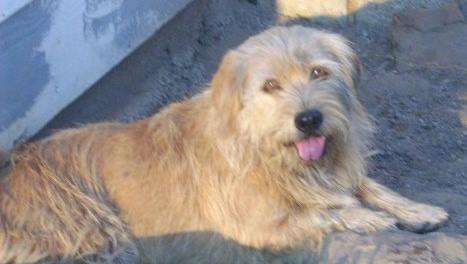
     This is an obituary of my treasured beagle/Lhaso Apso, Sunny. Like most of these other posts, it originally appeared on Another Lover of the Blade. 

     "You know the previous post? The one right below this one you're reading now, about how awful a week, and so far the month of July, has been?

     It hasn't gotten better. At all.

     My dog Sunny died yesterday afternoon(Thursday).
     So I stood on the back porch in the pouring rain thinking back over the memories of our lives and all the lessons she helped me find out, wondering "Now what?"
      I mean, what do you do when you lose someone you've known since you were nine, talked you through hard times, deaths of family members, offered advice when needed, listened to whatever's going on... Without a dog to listen, what do you do in times like that? How do you cope? Who do you talk to?

     This story begins somewhere in late May of 2002, we're all gathered at the town house in Westville to celebrate mine and my aunt's birthdays. Mom goes running to Harps for something or other, milk, maybe, and as soon as she gets back grabs Dad and shoots back out of the driveway. When they come back, they go find Mimi and hold a whispered conversation. After we open the presents, somebody says we need to come outside. So we go through the kitchen into the garage and - right there, in a little box with a newspaper carpet - was a puppy! A little, fuzzy, cute-looking, honey-colored beagle puppy!
     Well, half beagle. The other half was Lhasa Apso. (I've NEVER been able to spell that.) That still remains one of the strangest pedigrees I've ever heard of.
     I've always liked small-to-medium-sized dogs, probably because I'm kind of a smaller-sized person. And Wishbone was a Jack Russell, and who doesn't want a Wishbone of their own? (Or a Buddy, for that matter?) But, anyway, I loved beagles especially, after seeing Inspector Gadgetafter the first garage sale we had in Morris, I sort of fell in love with Penny's beagle Brain. And Sport, well, he was good, but he was big. And he was more of Mom's dog more than anyone else's.
     So there were these puppies at Harps, about eight weeks old, that were half beagle and half Lhasa Apso. The only Lhasa Apsos I knew were Taz and Ty Rae next door, who were always yapping whenever I'd play ball in the backyard. Anyway, Mom and Dad picked out the most beagle-ish-looking one for me.
     I decided to name her Sunshine, calling her Sunny most of the time. I was one of the happiest boys in the world, first a basketball goal for my eighth birthday, and then a puppy for my ninth.

      She was a mischievous puppy. Always digging holes and escaping the yard, then trotting triumphantly around the neighborhood. If I could fit my sneaker into a hole in the chain-link fence, she could and did escape from there. A place where an armadillo punched a gap through gave me particular trouble. So I'm very good at plugging holes in fences now with whatever's handy; rocks, sticks, cement blocks, overturned wagons, etc. Other than that, she joined the neighborhood's Dog Club quickly and fit in seamlessly. She also developed her camouflaging abilities, hiding in plain sight in the dead grass. She was very good at that. 
     Her name didn't really match her personality; she was always a little gloomy, complaining or worrying about something. Like owner like pet, maybe? Very rarely was she "happy", but contented, more or less, and when things were well, her joyfullness was something to see, radiating a warm glow of happiness out to reach whoever was nearby.
     The next year we got Shadow, a large ball of fun-loving energy, the half Lab/half Airedale was the only dog I've ever successfully taught how to play fetch. He became second-in-rank pretty quickly, just because of his size, and so Sunny settled resignedly into the role of the pack's omega dog. 

     Well, we moved across the county to Beggs about a year and a half later, and the next summer she had her first litter of puppies on the day of Ronald Reagan's funeral. There were nine of them, all given weather-related names: Avalanche, Cloudy, Eclipse, Hailey, Hurricane, Sunset, Thunderbolt, Windy and Pawprint. Courtney named Pawprint, because he had a large black paw-mark on the side of his white coat. He only lived about three days, before we could name the rest. Three puppies were stillborn, so they remain nameless.
     I was freaking out, so was Sunny, it was STRESSFUL!
     Cloudy, Eclipse and Pawprint were black-and-white, Cloudy fit his name well, he was sorta dull and drab. Eclipse was sweet, but otherwise pretty average, too. Thunderbolt and Hurricane were solid brown, the color of a slightly-melted Hershey's on a sunny day. Thunderbolt, named after the famous TV star in 101 Dalmatians, was very much a rough-and-tumble kind of guy, a leader, very bossy. Hurricane was one of the runts, he was kind of timid, and he got picked on often. The siblings he got along with best were Hailey and Windy. They were Shadow's; with his mostly-black-with-brown-trim coloring. Hailey was the smallest of any of them, even Hurricane was bigger, but she was spunky. She'd always be willing to play or fight with anybody, and got into lots of arguments with Sunset. She got her name from Hailey's Comet, which I think I was studying about then. Windy was one of the largest puppies, and by far the most lethargic. She just never did anything, and she smelled terrible. I think she had some kind of disability(yes, I think dogs can have special needs). Avalanche was certainly overshadowed by his twin, he was always second-best at most games. Sunset was the oldest, and so she had all those qualities that go with it. She was tops at everything or near it, skilled not only at her Playing Games classes and nosing her way to the front of the food line, but also other important subjects such as Listening to People, Cuddling and Looking Cute. She even did decently well in Intro to Fetch. And she and Avalanche  had that classic beagle calico coat, splotches of light and dark brown on a white base coat. 
     My favorites of this litter were Sunset and Hailey, it was incredibly hard to see them leave. Of course Sunset was the first pup chosen, and then Hurricane and Avalanche. Hailey was close behind them to finding her Mys, and so we took the rest to Wal-Mart one day, in order to find homes for them. It was hot that day. The rest found homes, Windy getting chosen last. Except for Eclipse. She was one of the pups in the running to stay, her main rivals for this honor were Sunset, Avalanche and Hailey. And then when they were chosen by other people, she was picked to stay and grow up as the fourth member of the dog pack.

     Several years went by, and it was time for Sunny to have another litter, this bunch was born near my birthday. This time their names were delayed by the fact that Dad and I were in Kansas City. We'd already used a weather theme; and flowers were reserved for cats; as was Pixar characters. So we went with candy.  These puppies were Fastbreak, Hershey, Kit Kat, Snickers, M&M, Milky Way, Overload, Payday, Rolo, Snickers and Twix. They were tolerated grumpily by Sport, Shadow was sort of an uncle to the ones that weren't his. Klipsey, a young teenager by now, was the ditzy babysitter most of the time. "Mom, I'll watch the kids if you'll give me a raise on my food allowance!"
     Fastbreak, Milky Way and Overload were all solid brown like Hurricane and Thunderbolt were, the calicoed pups were Kit Kat, Snickers, Payday and Twix, and Shadow's were Hershey, M&M and Rolo.   
     Most of them weren't as full-of-personality as the first litter, and it wasn't as easy to tell them all apart. Rolo was fat, like the candy, and stationary. Fastbreak was named after the then-new Reese's Fastbreak bar, Overload was a Reese's-like candy found only at QuikTrip with cookies set on top of the peanut butter cups.
      Kit Kat and Snickers were the top dogs, I guess, taking the roles passed to them by Avalanche and Sunset. I had this dream once, just after they'd all been taken, that I'm coming around the house headed for the barn, and Snickers is leading this charge of puppies towards me. And then I could suddenly see out of my right eye. Always sort of wished that dream really happened.

     And besides being a sort-of-grouchy mother, Sunny was a very good listener. Whether it was moving, or trying to cope with deaths or whatever, she was always there to help things get straightened out.
     This grief....it's like when Mimi died. Grandmothers are wonderful people, and their love is only matched by dogs'. You can talk about just about anything with them. And the hurt in the empty space once they go, it never fully heals. And not just when Mimi died, either. Dado, too. And to a definitely lesser extent, Nina, Grandma Bates or Grandma Joy.
     Not even just people, animals' deaths sting, too. When the puppies were gone, Shadow was shot, Klipsey run over, Sport died, Jenny arrested, Pepper's owner was found, the disappearances of Ann, Dan and Georgie.
     The long list of wonderful cats, each special in their own way. Meowie, Princess, Daisy, Minnie, Creek, Cricket, Firefly, Buzz, Milo, Dodge, Cadillac, Tulip, Dot, Lady, Liesel, Brigitta, Duchess, Skittles, Benjy, Maggie, Meg, the others I can't quite remember.
     Dixie the paint horse sold at the auction, the deaths of Rocky and Swiftdust the guinea pigs,  Libby the goat hanging herself. Stormy, Lucy, Lizzie and Patty the goats moving.

     Dealing with the remodeling, all that chaos; or talking about the frustrations of finding a place in the church, in the youth group, with the homeschool group, problems about girls, things going on in friends' lives needing prayer, she'd listen. Life is confusing, and a good dog can do wonders. It's also hard, and they help cheer us up, remind us that they still love us, even if things aren't going right.
     When Trevor or Amy was on the way or being born, or we were considering adopting that Russian girl with spina bifida, or those times of deep loneliness, when friends were scarce and the younger kids were all doing something together, wondering what life would be like if the baby between Courtney and I had lived, always thought of it as a sister named Lindsay. She would've been about a year younger than me.
     Helping with when I was working on a new story and some point wasn't resolving itself right, or the plot suddenly ran dead, or which characters could be introduced to make the story better. Pondering the amazing work of Pixar, or the people behind Sam Raimi's Spider-Man movies. Jan Karon's beautifully-done town of Mitford, the characters found in the Anne of Green Gables series,The Princess Bride, Charlotte's Web, The Book of Virtues, going through the Chronicles of Narnia for the zillionth time.
     With the choir, and then drama, all the musicals and plays, that were really pointless by themselves, but incredibly important at the time and key in my growing up.
     When I was drowning in red tape, trying to attempt to learn to drive, what life could be if that was possible, how much easier in some ways it would be. As one example, that's sort of why I haven't really been in a relationship but that once. I could get an actual job anyplace when things were slow at the paper, go hang out with friends any time. Things like that. All the mess of trying to figure out what I wanted to study in college, the forms that needed filling out ASAP, applying to a few colleges, the endless questioning of well-meaning people, figuring out which college to attend, the agony of life this past year in a spiritually vacant bubble.
     All the weird injuries; my breaking a finger playing basketball or a toe running into a cardboard box, Dad falling off a ladder and hurting his ribs, or the roof and tearing up his shoulder, Caleb and Trevor splitting their heads open on furniture. 
     I was scared to death just before heading to camp, and nervous about Youth Tour, unsure about graduation, petrified of college. Sunny helped calm me down, told me I'd get through them.

      She was lying there by my feet providing comfort and encouragement when typing or writing an article, hiding under my bed when there were storms or Mom was going to get her in trouble for something. She didn't completely understand my wanting to learn to play guitar, but was there to say something good all the times when I wanted to fire Abby Lee into the wall and give up.
     She took up chronicling local events for her weekly gossip column in the Fenceville Weekly News, of course, I had to help her type, since dogs don't have thumbs, but she dictated. It was also good practice for me.

     So...I'm still not doing too well. And all too soon I have to go back to (shudders) college. Without Sunny as backup, or Skeet. Copper understands college a little better than they did, but they knew me so well. Things seem messy and complicated already, before all this, now - What on Earth am I supposed to do now, Lord? What could I possibly be learning? How can I go on to face whatever's coming? God seems kind of far away right now, His promises I'm having trouble clinging to. That sounds horrible to say, but...animals are usually easier to get along with than people. And grief is hard, when it's someone you love.
     I know she was just a dog. But, at the same time, you have to realize: She was a dog, and everything that goes with that. She was my dog. There's only one or two dogs who ever are tasked with that crucial task of raising a boy. One of the quotes from The Little Rascals that's always stuck with me, besides the all the obvious lines, is when Stymie tells Alfalfa, "All I know is, you only make a once-in-a-lifetime buddy, once in a lifetime." 

     Amanda messaged me late last night, kind of a "bearing one another's burdens" sort of thing.  That was good. Ravi, too, and Steven and Jamie and Shelly and several other people also expressed their condolences. It isn't much, but at the same time, it means everything. Kind of like after the fire, or with Mrs. Boyer's card, or a volleyball game being played when needed. One of those evidences of God's mercy and faithfulness when otherwise it's very dark.
     Things will, very slowly, begin to get better at some point. Eventually the ache will be tucked away, the gushing wound mostly stitched shut. But that time isn't here just yet.

     Love you, Sunny. Miss you so, so much."

Monday, May 6, 2013

The Art of Making Peanut Butter Sandwiches

     This is an essay adapted from my end-of-semester PowerPoint presentation for my computer class my freshman year at Northeastern State. (I guess it was memorable; I got a 100 for it.)  

      "We all love it, pretty much. Most people were raised on the stuff. We can make cookies and candy, all sorts of tasty things with it. What food am I talking about? Peanut butter! Of course, the most common way to eat the food popularized by George Washington Carver is through peanut butter sandwiches.
      "There are a lot of good points for the versatile sandwich; most importantly for college students, it's cheap. Any way you can save money should be followed. Another plus for students on the go is that it's so quick to make, you can just whip up a sandwich in no time flat and scarf it down while running to the next class. It's also easily customizable, lending itself to a myriad of inventive options.
      "Of course, there's also some downsides. By itself, plain peanut butter is rather bland and sticky. While healthier than most cafeteria food, it's still not particularly packed with nutrients, it requires some sort of silverware to scoop/slather onto some other edible surface, and some people are allergic to peanuts.
      "The "How-To" of making a basic peanut butter sandwich is very simple, almost too easy to list. Taking a utensil of some kind(generally knife or spoon), peanut butter is scooped out of the container, then spread onto a slice of bread, while another substance such as jelly is slathered onto a different bread slice. The contents will merge somewhat as the bread is pressed together, and then the sandwich is eaten."
      "There are varying ways of doing this, however. One way would be making homemade peanut butter, which is often done for health reasons in avoiding preservatives in the typical store-bought variety. Adventure-seekers, spotting a new way to experiment with tastes, also do this. The process used is very simple, dropping peanuts into a blender until a thick, grainy paste appears. This must be eaten quickly or refrigerated, however, as it will separate and be very nasty otherwise.
      "Those adventurous folks may continue their trip off the main highway of conformity by diving into a wide array of topping options.  This could include chocolate(My favorite, chocolate chips and chopped-up Snickers are recommended), or the typical jelly, with a large flavor-spectrum to choose from, ranging from grape to dandelion. Carrots or some other vegetable could be inserted in an effort to make it healthier, as could fruits like apples or bananas. If the sweetness is a problem, but chocolate doesn't quite do the trick, then honey or sugar might work well. An often overlooked topping that goes well is bacon.
      "And don't think that a typical store-bought loaf of white bread is your only option for what to build the sandwich on, either. A tortilla could be utilized very effectively, a pita could work in a pinch. Cookies make wonderful snack-sandwiches,  Oreos do a great job in this area. Bagels can add an interesting hearty foundation, making a filling meal. Hot dog/hamburger buns are not recommended, as their fluffy texture overwhelms everything and adds to the blandness of straight peanut butter.
      "The average American child eats something close to 1,500 peanut butter sandwiches by the time they head to college, with many more eaten then and later. Maybe next time you find yourself making a sandwich the typical way, consider trying something new. A new favorite might be right around the corner."

Thursday, May 2, 2013

Modern Society's Front Porch

      This was my final essay for Comp II my freshman year at Northeastern State.

     "It can be a blessing, or it could be the work of the devil. It can wreck a marriage or reunite families. It can be every bit as addicting a drug as alcohol, or it can be a form of therapy. It can help keep friendships alive, or it could get you fired. For every one and many more of these contradictory elements, social media can be either a good or bad thing. It is a tool, and as novelist Jack Schaefer wrote in Shane, a tool, whatever it is, is only as good or as bad as the man who uses it.  For the most part, social media, as a whole, is a good tool for communication.

     As humans, we are made to connect with others, to interact. We build up nations over time, subdivided by such things as state, tribe, city, neighborhood or family. The basic unit, however, is this concept we call "communities", which is a hard idea to precisely define. Webster's Collegiate Dictionary defines it this way: "All persons living in a specific location; or a group having interests or religion in common; or joint sharing." Stephanie M. Reich suggests that a "community" involves interdependence, communication and emotional connection, and is operated in a systematic way. It also involves dealing with people. (Reich) Over time, as new technologies are developed and distributed among the masses, the sense of community shifts as well, further complicating the issue. While talking of Time magazine in his book The Mechanical Bride, scholar Marshall McLuhan suggests that the press has fostered the image of the world as one single city as a byproduct of their work, in the process creating a new area for communities to develop.  With these new technologies, what once was relatively easy to define gradually spread out from a group in the same geographic area to groups with shared interests still with physical interactions, and then migrating into the digital world they became all shared interests with next to no face-to-face meetings. (Reich)

     As the Internet grew, sites like MySpace, Facebook, YouTube, Google+ and Twitter emerged, as well as other sites such as the children-oriented Webkinz, the dating sites eHarmony and Match.com, Internet radio on Pandora and Spotify, professional networking at LinkedIn and image-driven sites such as Pinterest and Tumblr. These can all fall under the general term "social media", which Thomas A. Bryer defines as "technologies that facilitate social interaction, make possible collaboration, and enable deliberation across stakeholders". Through social media, content and information can travel extremely fast, city agencies can get feedback on proposed policies as well as draw participation for events such as meetings or ceremonies. (Bryer) Elected officials can become better acquainted with their constituents' opinions and needs. Newspapers, radio and TV stations can find out what their audiences would like to see, as well as get news tips unavailable in any other format. For events of national scale, such as the shootings in Aurora or Sandy Hook, the Joplin tornado, Hurricane Sandy or the Boston bombings, information was first spread through social media sites, and then up-to-date proceedings were delivered via Twitter as the stories unfolded.

      Another aspect of the beneficial uses of digital resources is education, which has and can be improved through the use of social media, as Patrick Larkin notes. Larkin states that one of the basic tenets of public education has been to prepare students for life outside the classroom, and to create tomorrow's responsible citizens. He further argues that to create proper citizenship in our modern world, schools must embrace digital resources, which include social media. A former principal, Larkin outlines the way his school has benefitted from its new status as social-media-literate, with school news posted on a blog, Twitter account and Facebook page, giving the local newspaper instant access to potential stories, as well as giving parents lightning-fast updates on school happenings. These tools can also create easier pathways to learning, such as online classes: "Teacher and students now collaborate with other eager learners from anywhere - at any time - accessing and learning with experts in subjects they are passionate about. Social media is also learning media." (Larkin)

     Through LinkedIn, and to a lesser extent, Facebook, etc., jobseekers can land careers in their fields, as well as develop useful contacts to make their jobs run more smoothly. Advice and insights can be shared on how to craft a better-looking resume, nailing that important interview, or new techniques that could improve productivity. Portfolios of previous work history can be developed as companies increasingly research potential employees online, and references can give feedback with just a few mouse clicks.

      Journalist Wayne Greene offered an interesting angle into this subject when he commented on air-conditioning leading to the demise of knowing your neighbors. His editorial argued that as families migrated indoors into the newly air-conditioned houses to watch the new device of television, they stopped interacting with their local communities. People no longer sat on the porch with neighbors while their kids played in the street; instead they all sat huddled in their respective living rooms watching Bonanza or Happy Days. Through this new frontier of social media, in particular Facebook, Greene theorizes that "we have a chance to recreate the communities we lost sixty years ago." Used to, in our grandparents' time, you would have conversations with your neighbor over the fence on all manner of subjects, from national politics to the high school football season to where to find a good sale on tomatoes.  These are the things we discuss on Facebook, in a sense. Of course, they aren't exactly parallel; at times you are just yelling your opinion out into the netherworld of nothingness, and it can occasionally take a long while before someone replies to your post. It doesn't completely replace the front porch, but it serves as a close substitute for our era. "If we build communities online, all those things we lost when we started coming in every night might be regained." (Greene)

     Through Facebook, as we build our online communities, the handcuffs of proximity are loosed, as we can get to know almost anyone we wish,  no matter how far the distance might be between us. Personally, I use mine in order to keep track of news and to stay in touch with friends and family, scattered throughout fourteen different states and four countries. Many of my closest friends live in Missouri and surrounding states, and one of my sisters lives in Canada. Through Facebook, I've been able to stay in the loop of what's happening in their lives, in addition to being plugged into the large-scale support network of encouragement and sympathy, laughter and advice of friendship as we try to help each other though this life we live.

     For all these reasons listed and many others, the upside to online networking and benefits from utilizing social media far outweigh their deficiencies. It's an unshakable pillar of society that grew overnight, and though it will evolve as further new technologies emerge, our basic need for community is still intact. With so many helpful opportunities that communication through social media offers, we have the tools for changing our world for the better. Our communities exist now because of social media, and that's a good thing."

Tuesday, April 30, 2013

Fairy Tales - The Key to the World's Secrets

      I'm pretty sure most college students do NOT write argumentative essays on fairy tales.
     And I don't think Works Cited pages typically include works of Dr. Seuss or The Princess Bride. 
     But anyway, I wrote this for my Comp II class my freshman year at Northeastern State, and it turned out to be the highest-scoring essay in class for that paper. And I had a lot of fun researching it.

     "We don't understand this world we live in. We try to figure out what makes it work, why things in nature happen the way they do. We try to explain our own actions and reasonings. And we know more than we did in the Dark Ages. For as Dr. Seuss wrote, "The more that you read, the more you will know. The more that you learn, the more places you'll go." (I Can Read With My Eyes Shut!) But we still don't completely understand everything, and we probably never will. As we grow older, we lose track of the keys to get glimpses of this unfornseen knowledge. These keys are found in fairy tales, and we need, we must, hang on to them as grownups, in order to have a proper understanding of how the world works and our roles in it.

     Where do we start, then, to find these keys and whatever adventures stem from them? It would be a good idea to have a basic philosophy of life to keep in mind while on the journey. According to Martin Cothran in his article "The Rhetoric of Amazement", this world is enchanted. He states that writers of imaginative literature, like Dr. Seuss, take things apart and creatively reassemble them, allowing us to gain a clearer picture of the world. Cothran elaborates in a different article entitled "Is Fiction False?", pointing out that novels, short stories, etc. do not teach us truths by directly going from our questions to some abstraction. Instead, we learn the truths of concrete realities by experiencing what its' strengths and weaknesses are, how the truth plays out in practical reality.

      In his book Orthodoxy, 20th-century English jack-of-all-trades journalist/mystery author/aopologist/philosopher G. K. Chesterton wrote an essay entitled "The Ethics of Elfland". He opens by describing that the classical idea of democracy is really the same thing as tradition, as tradition is merely the democracy of the dead. In fact, he spends two pages outlining that point. Since, therefore, they really are the same thing, we ought not to discredit tradition merely because it is tradition. Chesterton says that "Fairy tales are the entirely reasonable things. They are not fantasies, for compared with them other things are fantastic. For Fairyland is nothing but the sunny country of common sense." There some developments which are purely logical and reasonable, for example, the fact that if the Ugly Stepsisters are older than Cinderella, then Cinderella is younger than the Ugly Stepsisters. However, the true test of Fairyland is of the imagination, which separates the rational from the irrational. We simply cannot fathom two plus three not equalling five, so that is a rational fact. But we can picture the grass one day growing blue, or a dog driving a motorcycle. These are irrational ideas. And Chesterton argues that most of the world we live iin is, by this test, and extremely irrational place.

     For such an obscure character of history, G. K. Chesterton had a very large impact on the twentieth century, influencing those such as apologist C. S. Lewis, authors Dorothy Sayers and J. K. Rowling, and filmmakers Orson Welles and Alfred Hitchcock. Ralph C. Wood reviewed Chesterton's essay collection in his article "Orthodoxy at a Hundred", Wood said that while Chesterton was often cantakerous, and quite a character, he sought to amend the wrongs of his times "by means of a fiesty and witty, punning and alliterative kind of journalism." In the course of doing so, "Chesterton treats the most serious things in the lightest manner, probing depths when he appears to be skating on surfaces." (Wood)

     For all the apparently pointlessness of activities such as ice skating, there are some real uses and benefits, too. We may forget the particulars of a tale we hear as children, but that doesn't mean that we've forgotten about the story. Nancy Willard explains this in a piece for Horn Book Magazine. She says that while the story one forgets about disappears forever, the story one forgets only leaves for a short time. It will come back when needed; the stories don't do long goodbyes very well. They are a shelter to keep us safe, as well as a station, sending us out in the world. (Willard)

      As they send us out into the world, like any good guardian, they leave us pieces of advice to guide us in our travels. For all the wonderful satire of William Goldman's cult classic The Princess Bride, he makes very clear to drive one point home: Life isn't fair. Beauty and the Beast shows us that a thing must be loved before it is lovable in itself, that change can occur by showing kindness to those who are undeserving of it. The Three Little Pigs teaches us that in addition to work ethic, we also need the proper knowledge and materials to succeed. Spider-Man and The Sword of Damocles both prove poignantly that when given great power, we must be careful to exercise it in a manner fitting such a great responsibility. Charlotte's Web shocks us by depicting how far the bonds of friendship can stretch us.

      Fairy tales have many depths and layers, almost like an onion, Willard notes. As we grow, our depth and understanding increases, and much like Narnia's Aslan, the stories grow bigger the older we become. Chesterton outlined that when we are very young children, we merely need tales, not necessarily fairy tales. Life itself is so interesting, we simply cannot conceive that we might ever need more depths than what we see. "A child of seven is excited by being told that Tommy opened a door and saw a dragon. But a child of three is excited that Tommy opened a door." (Chesterton)

        Stories and fairy tales teach us about life. They show us how the world works, set an example of how we should act. This sometimes means showing the other side of that coin, the consequences of what happens when we fail or disobey. This is why Jesus taught in parables, and the Greeks created their wonderful mythology, because we are wired to retain the things we hear through story, and then think about the tales we hear, and in doing so learn from them. Great ideas can be passed on, traits of virtue live immortally in legends. We get our morals and values from the stories we absorb and drink in, which makes the art of storytelling the most effective teaching tool there is.

     This subject could easily take up whole volumes, as well as branching into other fields such as psychology or theology. There is too much information to be bottled up and left alone. However, I will sum up: This world is a mysterious place. We are all on a long journey, and the keys to fulfill the quests we must face are found in the stories we learn as children. Like Chesterton, these too are my attitudes towards life, which I also felt before I could think, and which I too thought before I could write."

Sunday, April 28, 2013

Jonah

    Well, when I was little, before Courtney was born, in the rare times when I wasn't reenacting the latesr ballgame in the backyard, or inventing wonderful comebacks and fierce rivalries with the counting cats, or learning basic math while playing board games, I would gather up my stuffed animals, set them all in a row, and preach a sermon to the cottony congregation. They didn't complain much about the depth of teaching(or lack of), since I didn't know anyone cared about things like that until about five years later. And they didn't mind that it was always the same sermon over and over, about Jonah. (With maybe some David and Goliath occasionally in there, too.) 

       So, now fifteen years later, I'm sitting in my polar dorm room, with my homework mostly done for the most part, and wishing I knew people aroud here to do stuff with, where I didn't constantly have to keep my guard up, or pretend whatever was happening was interesting, or where I wouldn't feel like a burden to people. Just something...fun. 

       So, I guess I'll find Bruno and Fetch the Beanie Babies, Dusty the Webkinz, Traveler the random dog Amanda sent me, and Abby Lee the guitar, tell them to wake up, sing a hymn or two(quietly, very quietly. Sigh. They should be sung loudly and joyfully.) and then grab my Bible off the shelf and flip it open somewhere and study it. May as well be Jonah as any other place, right? 

     (Continued several days later, in much the same mood...) 

     "The word of the Lord came to Jonah the son of Amittai: "Go to the great city of Nineveh and preach against it, because its wickedness has come before me." 
     But Jonah ran away from the Lord an headed to Tarshish. he went down to Joppa, where he found a ship bound for that port. After paying the fare, he went aboard and sailed for Tarshish to flee from the Lord." 
   I'm interrupting here, in kind a William Goldman-ish way, to comment on these verses. If God has decided to destroy Nineveh because he's sick of dealing with them, they must have been aseriously wicked people. I don't really know anything much about ancient Middle-Eastern geography(or geography of anywhere at any time), but Tarshish is a long ways from Nineveh in the opposite direction. Maybe it's like having to be in Georgia and driving towards Oregon instead. 
   Anyway, the point is, Jonah is disobeying. And...did he really think he could hide from God? 
     "Then the Lord sent a great wind on the sea, and such a violent storm arose that the ship threatened to break up. All the sailors were afraid and each one cried out to his own god. And they threw all the cargo into the sea to lighten the ship. 
     But Jonah had gone below deck, where he lay down and fell into a deep sleep. The captain went to him and said, "How can you sleep? Get up and call on your god! Maybe he will take notice of us, and we will not perish." 
   Whatever polythestic religion(s) the sailors had, they got this part right. This was bad. They were panicking, and knew somehow, way hidden deep in some mysterious way, they knew that God was the ruler of all. 
     "Then the sailors said to each other, "Come, let us cast lots to find out who is responsible for this calamity." They cast lots and the lot fell on Jonah. 
     So they asked him, "Tell us, who is responsible for making all this trouble for us? What do you do? Where do you come from?  What is your country? From what people are you?" 
     He answered, "I am a Hebrew and I worship the Lord, the God of heaven, who made the sea and the land." 
     This terrified them and they asked, "What have you done?" (They knew he was running away from the Lord, because he had already told them so.) 
   Isn't this just unbelievable, Jonah's act of trying to run away in the first place? There must have been plenty of conversations between the sailors trying to figure out who this guy was, and why he was there. And again, proof that they knew about God's supremacy, by their incredulous question. 
     "The sea was getting rougher and rougher. So they asked him, "What can we do to you to get the sea calm down for us?" 
     "Pick me up and throw me into the sea," he replied, "and it will become calm. I know that it is my fault that this great storm has come upon us." 
   Was he trying to commit suicide, seeing as the running-away plan wasn't working? And that is a strange answer...
     "Instead, the men did their best to row back to land. But they could not; the sea grew even wilder than before. Then they cried out to the Lord, "O Lord, please do not let us die for taking this man's life. Do not hold us accountable for killing an innocent man, for you, O Lord, have done as you pleased." 
   These sailors are looking like the best people in the story so far...they didn't want to murder someone, so they tried to get him away as fast as possible. But then when they see they don't really have that option, their prayer is heartfelt and genuine, obeying by doing something they didn't understand. Their hearts were being re-formed, changed drastically in a way that wasn't tame, but it was good. 
     "Then they took Jonah and threw him overboard, and the raging seas grew calm. At this the men greatly feared the Lord, and they offered a sarifice to the Lord and made vows to him. But the Lord provided a great fish to swallow Jonah, and Jonah was inside the fish three days and three nights. 
   Still more proof that they were changed. And another example of God's providence, his directing of things that fit together well looking back, but that don't make sense at the moment. 
   But, anyway, that ends chapter one. 

     "From inside the fish Jonah prayed to the Lord his God. 
     He said, "In my distress I called to the Lord, and he answered me. From the depths of the grave I called for help, and you listened to my cry. You hurled me into the deep, into the very heart of the seas, and the currents swirled about me; all your waves and breakers swept over me. I said, "I have been banished from your sight; yet I will look again toward your holy temple." The engulfing waters threatened me, the deep surrounded me; seasweed was wrapped around my head. To the roots of the mountains I sank down; the earth beneath barred me in forever. But you brought my life up from the pit, O Lord my God. 
     "When my life was ebbing away, I remembered you, Lord, and my prayer rose to you, to your holy temple. 
"Those who cling to worthless idols forfiet the grace that could be theirs. But I, with a song of thanksgiving, will sacrifice to you. What I have vowed I will make good. Salvation comes from the Lord." 
     And the Lord commanded the fish, and it vomited Jonah onto dry land. 
   Now, what he's saying is right...but...something just doesn't quite add up. See what's missing there? "I'm sorry for disobeying, please forgive me, Lord." That's kind of an important omission - if he would have said that, it would have been written down. But - it isn't.
He's depressed, and I think anyone would be, stuck inside a fish. But somehow this prayer is all about me, me, me...

Now to chapter three. 

     (Concluded a few days after that, while attempting to rest over the weekend and ignore this sickness that's trying to capture me...)

     "Then the word of the Lord came to Jonah a second time: "Go to the great city of Nineveh and proclaim to it the message I give you." 
     Jonah obeyed the word of the Lord and went to Nineveh. Now, Nineveh was a very large city; it took three days to go all through it. 
   I heard once that would be an estimated population of 120,000, which was ENROMOUS in that day. Something like New York City or LA nowadays. 
     "Jonah started into the city, going a day's journey, and he proclaimed: "Forty more days and Nineveh will be destroyed." The Ninevites believed God. They declared a fast, and all of them, from the greatest to the least, put on sackcloth. 
   Jonah probably loved that message, getting to talk about the destruction of his enemies' greatest city. But the important thing is that the Ninevites believed what he was saying and repented. Fasting and sackcloth don't really have modern equivalents, but they were signs of very serious prayer and repentance. 
     "When the news reached the king of Nineveh, he rose from his throne, took off his royal robes, covered himself with sackcloth and sat down in the dust. Then he issued a proclaimation in Nineveh: "By the decree of the king and his nobles: Do not let any man or beast, herd or flock, taste anything, do not let them eat or drink. But let man and beast be covered with sackcloth. Let everyone call urgently on God. Let them give up their evil ways and their violence. Who knows? God may yet relent and with compassion turn from his fierce anger so that we will not perish." 
     "When God saw what they did and how they turned from their evil ways, he had compassion and did not bring upon them the desctruction he had threatened." 
   Wow. This is just amazing, so mind-boggling to consider: That a righteous holy God could forgive our sinful evil actions - Over and over and over... 
   This is also where most of the storybook versions we learn in Sunday School when five years old end. But it isn't actually the end of the story...
   We still have one final chapter in this very strange little book.

     "But Jonah was greatly displeased and became angry. He prayed to the Lord, "O Lord, is this not what I said when I was still at home? That is why I was so quick to flee to Tarshish. I knew that you were a gracious and compassionate God, slow to anger and abounding in love; a God who relents from sending calamity. Now, O Lord, take away my life, for it is better for me to die than to live." "But the Lord replied, "Have you any right to be angry?" 
   Uh... Really? So he runs away; reluctantly obeys and gleefully condemns the city, and then complains because God is merciful. And there's that suicidal tendency again. It's just so unbelievably petty. And then God's response, much like his answer to Job: "Do you have any real reason to be angry with Me?" 
     "Jonah went out and set down in a place wast of the city. There he made himself a shelter, sat in its' shade and waited to see what would happen to the city. Then the Lord God provided a vine and made it grow up over Jonah to give shade for his head to ease his discomfort, and Jonah was very happy about the vine. But at dawn the next day God provided a worm, which chewed the vine so that it withered. When the sun rose, God provided a scorching east wind, and the sun blazed on Jonah's head so that he grew faint. He wanted to die, and said, "It would be better for me to die than to live." 
   How did he build a shelter? Out of what? And he's just going to sit there and watch for...nothing? Then God provides in his mercy a plant to grow to give shade, which Jonah does not in any way deserve. How did it grow over six feet in one day, anyway? Those aren't important, but curious questions that come up while reading... 
   God's mercy is also tempered with justice, so he killed the plant and raised up a might wind. And STILL Jonah doesn't get it.
     "But God said to Jonah, "Do you have a right to be angry about the vine?" 
     "I do," he said. "I am angry enough to die." 
     But the Lord said, "You have been concerned about this vine, though you did not tend it or make it grow. It sprang up overnight and died overnight. But Nineveh has more than a hundred and twenty thousand people who cannot tell their left hand from their right, and many cattle as well. Should I not be concerned about that great city?" 
   And that's it. The end. A reminder that God is God, and we are not. We usually don't understand his purposes, but he has a reason for them.